Madagascar: Vanilla village development
Education, food security and healthcare improvement for vanilla growing villages.
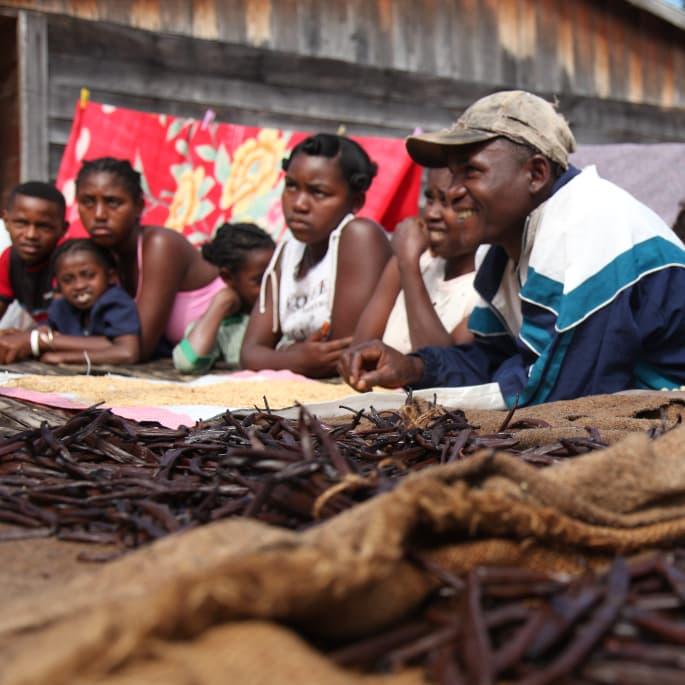
Madagascar is home to most of the world’s production of vanilla beans. This activity relies on thousands of small-scale producers who are the custodians of a unique tradition and know-how. In the Sava region, our efforts have reached more than 25,000 people across 33 villages through a rural development programme addressing key needs such as education, food security, health, and the promotion of alternative income-generating activities.
Improving access to education
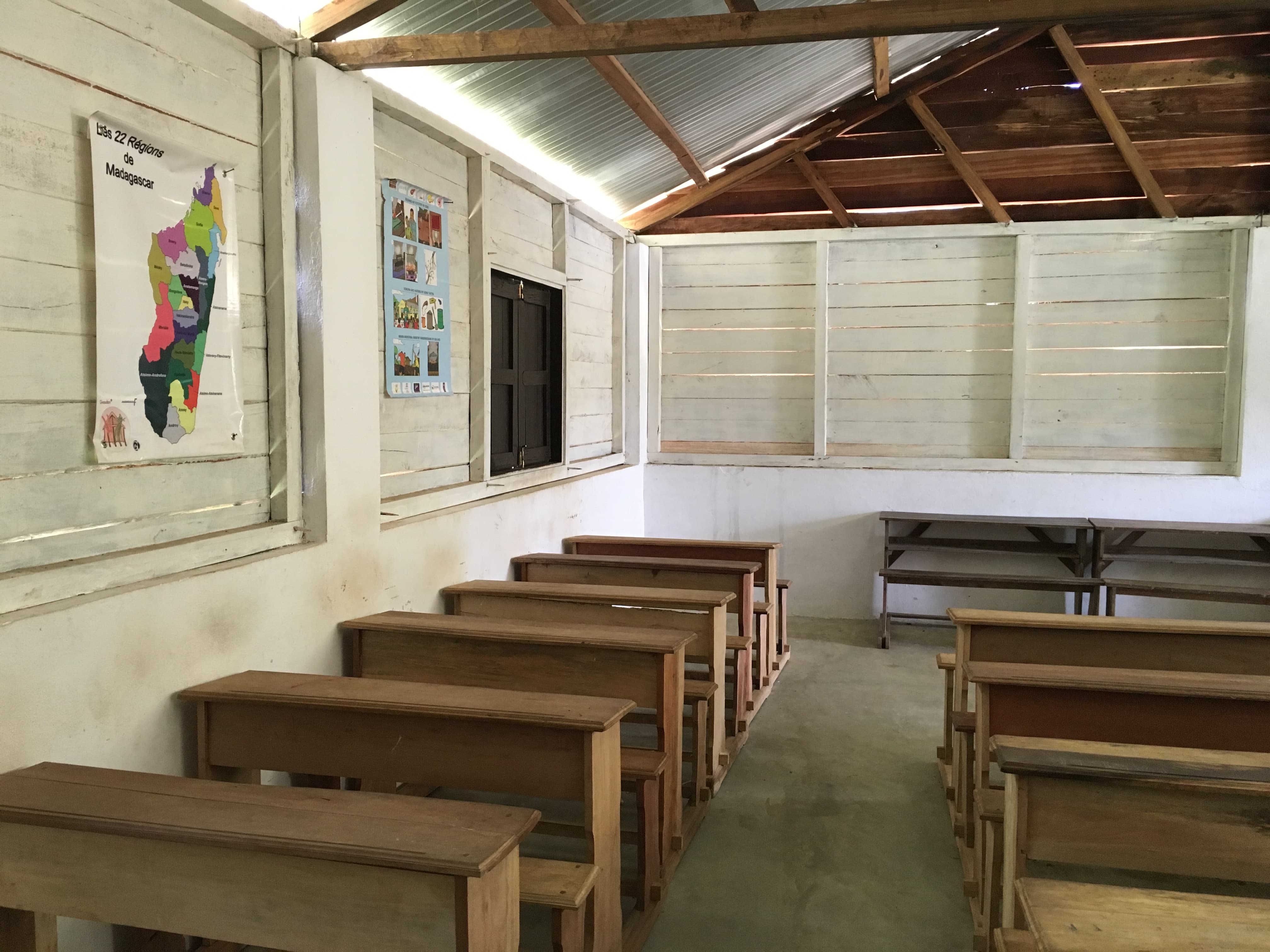
The Givaudan Foundation has contributed to the construction and rehabilitation of 30 schools in the region, benefiting more than 5,000 schoolchildren. Communities recognise the importance of education for the future of their children and many villagers have actively contributed to school construction.
Access to safe water and hygiene
Improving access to safe water is a key objective. A significant proportion of illnesses in these villages is linked to unsafe drinking water and poor hygiene practices. To address this, more than 80 wells have been constructed or rehabilitated, providing reliable access to clean water.
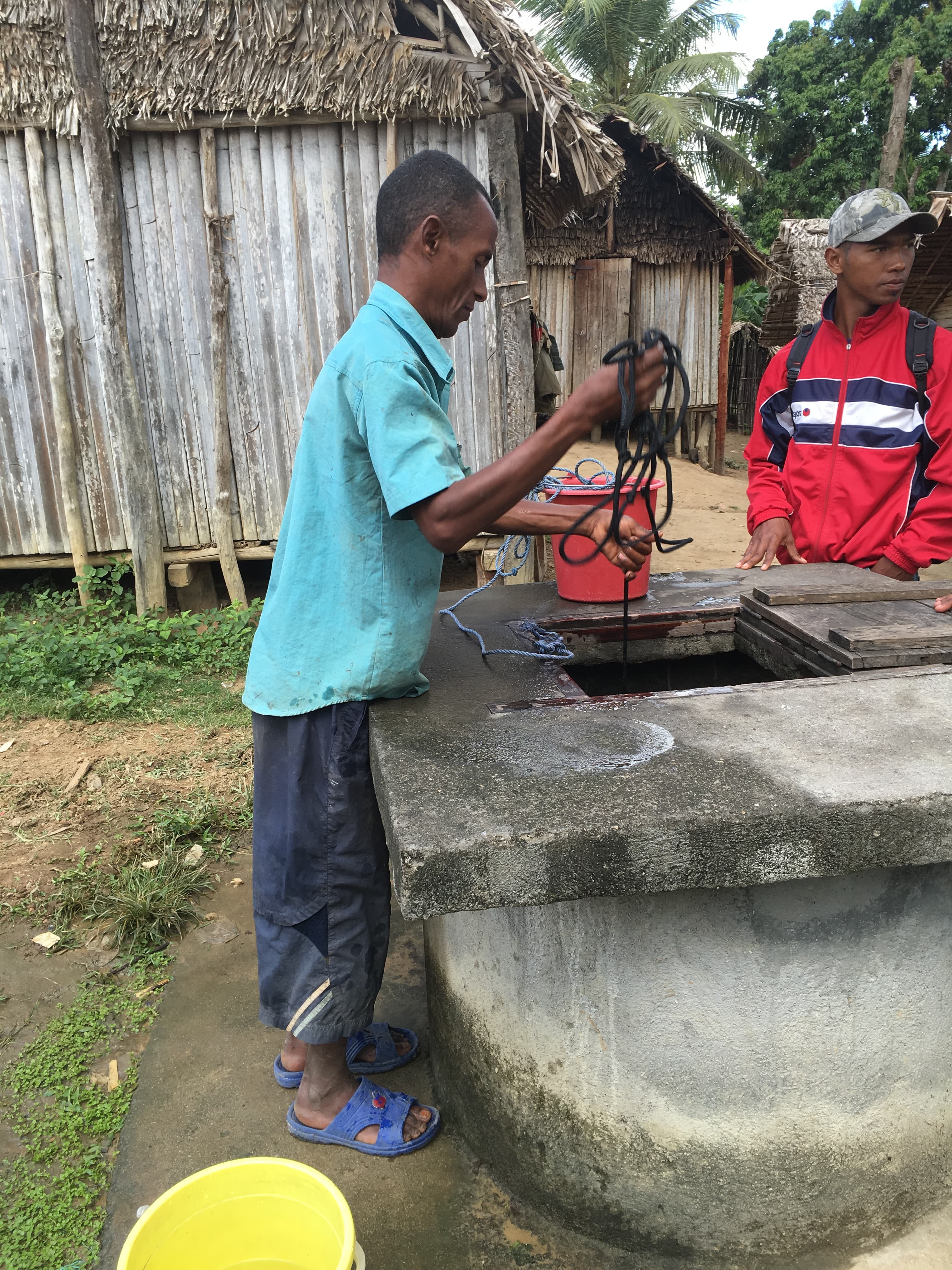
“Before, because our water source was surface water, villagers suffered from diseases such as bilharzia. the construction of water wells which mitigated the spread of disease and improved the health of villagers.”
Perlette, villager and president of the wells management committee
Strengthening access to healthcare
Many remote communities in the region are underserved by public healthcare services. To support access to care, two health centres have been established, providing primary healthcare services to more than 10,000 individuals. Each centre is equipped with potable water, electricity, and essential medical equipment. In collaboration with health authorities, these facilities receive ongoing support and supervision to ensure sustainable and safe healthcare provision.
Energy-saving cookstove and environmental education
As part of our commitment to preserving natural resources, the Givaudan Foundation has supported the distribution of 7,000 energy-efficient cookstoves to vanilla farming households.
Around 5,000 students have also been supported through environmental education programmes, delivered by teachers trained to integrate sustainability topics using an interactive “picture box” method. Each participating school established its own garden, with support provided in the form of materials, seeds, and plants.
Tree-planting and plastic recycling workshops further strengthened environmental awareness among students. In addition, two school canteens were equipped with energy-efficient cookstoves.
"One of the main advantages of using the energy-saving cook stove is the wood savings. Additionally, it is easy to clean the pots, as it produces little smoke, preventing them from getting blackened and making cleaning difficult. The speed of cooking is also appreciated, especially when I have visitors. I really enjoy cooking with this stove compared to the traditional stoves."
Serge, vanilla farmer